


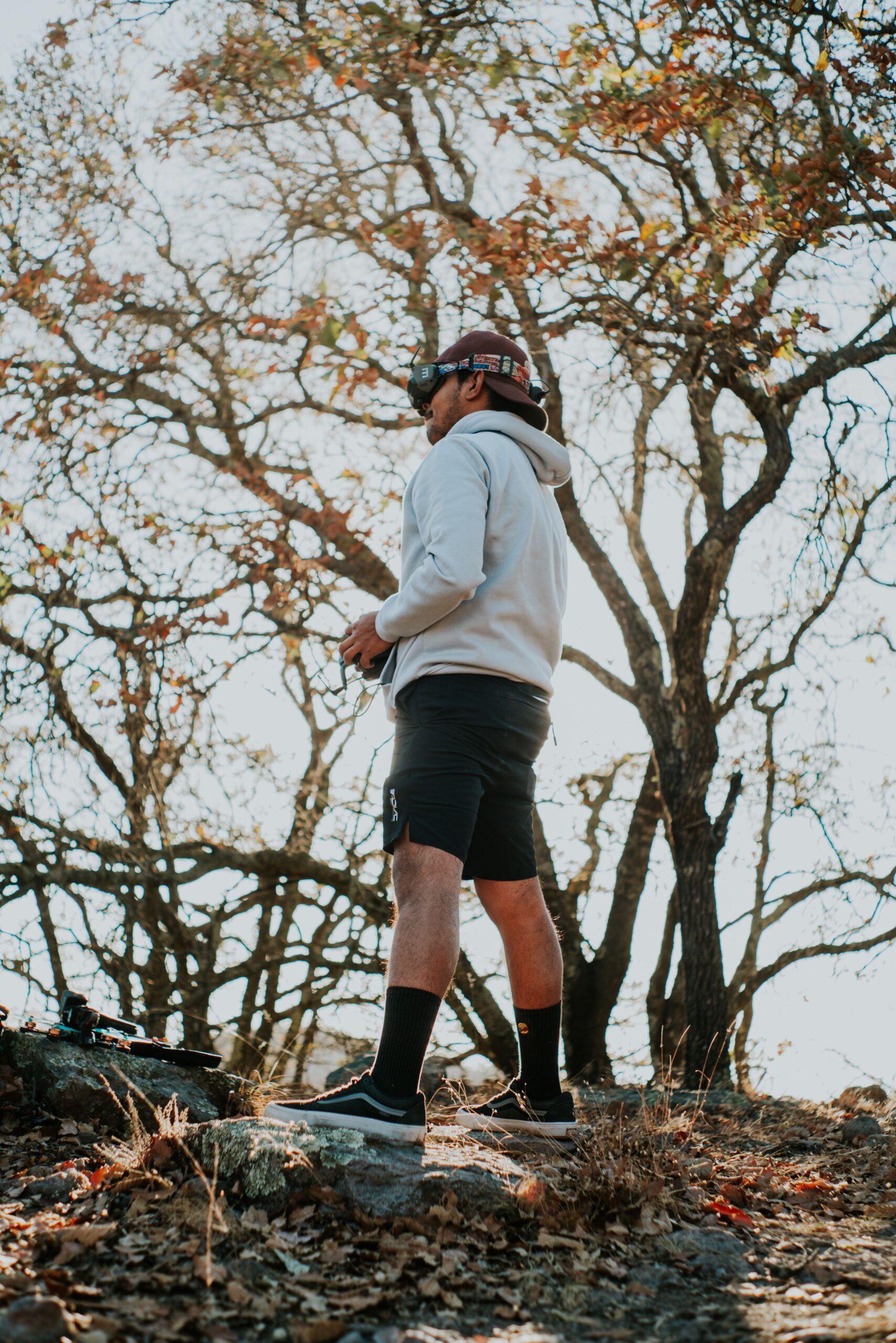
Ask a hundred FPV beginners what purchase they’re most stuck on, and the answer is almost always the same: goggles. Not the drone — the goggles. The drone forums are full of it. And the reason beginners freeze up is that they’re asking the wrong question first. “Which goggles should I buy?” has no good answer until you’ve answered the real one: which video system are you buying into?
That’s the single most important idea in this guide, and it comes straight from the community: choose the video system before the goggles. Goggles are not universal monitors you can plug anything into — they are locked to a transmission ecosystem. The goggles you buy decide which drones you can fly, and that decision is expensive to reverse. This guide explains the four systems, the lock-in each one carries, and what to buy at three budgets. No lab testing here — this is community knowledge and manufacturer documentation, organized into the decision a beginner actually needs to make.
The four video systems, honestly assessed
Analog — the cheapest, most universal starting point
Analog FPV is the original system and still the cheapest way to see through a drone’s eyes. A basic analog setup means a 5.8GHz video transmitter (VTX) on the quad and goggles or a monitor that receives it. Any analog VTX talks to any analog receiver — there is no ecosystem lock-in at all, which is analog’s superpower.
The trade-off is image quality. Analog video looks like a 1990s security camera: usable, characterful, and genuinely fine for learning — but once you’ve seen digital, there’s no going back. Latency is low and consistent, which is why many experienced racers still fly analog for the events where milliseconds matter.
Where analog makes sense: tiny whoops. Nearly every beginner tiny whoop ships with an analog VTX, and cheap analog box goggles (the EMAX Transporter 2 and Eachine EV800DM are the names that come up most in beginner threads) cost a fraction of digital goggles. If your plan is “tiny whoop first, decide later,” analog keeps the door open to everything. Read our tiny whoop beginner guide for the full first-drone picture.
DJI O4 — the best image, the tightest walls
DJI’s digital FPV system (O4, the current generation) has the best image quality in the hobby by a clear margin. It looks like flying with a GoPro strapped to your face, and for cinematic flying it’s transformative. The catch is the ecosystem: DJI goggles only work with DJI air units, full stop. DJI’s goggles — Goggles 2, Goggles 3, Goggles Integra, and the newer Goggles N3 — have no analog AV input, so they cannot receive analog video at all. Buy DJI goggles and you can only fly DJI-equipped quads.
The community’s easiest digital on-ramp is the DJI Goggles N3 (roughly $229 at the time of writing, per community pricing discussions), which the forums consistently recommend to beginners who want digital without the flagship price. Pair it with a DJI O4 air unit on a bind-and-fly quad and you’re flying digital for the least money DJI allows.
Where DJI makes sense: if you already own DJI gear (a Neo with Goggles N3, for example — see our DJI-to-FPV upgrade path), the marginal cost of staying in the ecosystem is low. Where it doesn’t: if you want to fly tiny whoops (mostly analog) and bigger digital quads with the same goggles, DJI can’t do it. Know which pilot you are before you commit.
Walksnail — the middle path
Walksnail (by Caddx) is the community’s compromise candidate: digital image quality well above analog, an open-ish ecosystem that plays nicely with third-party quads, and — critically — goggles that can receive both digital and analog video. The Walksnail Goggles X is the model that comes up most in “which goggles” threads for exactly this reason: one headset that flies your analog tiny whoop on Monday and your digital 3.5″ on Saturday.
The other reason Walksnail keeps coming up is the control link. As our ELRS explainer covers, the combination many experienced pilots actually run is Walksnail video plus an ELRS control link — best-of-breed video with the open-source radio protocol, no single-vendor lock-in on either side. If the idea of being tied to one company’s roadmap makes you uneasy, this is the stack the community points to.
Where Walksnail makes sense: beginners who want digital image quality but refuse to be locked out of the analog tiny-whoop world. The honest caveat is that Walksnail’s image, while good, doesn’t match DJI’s, and its ecosystem is smaller than either analog’s or DJI’s.
HDZero — the latency king, the smallest ecosystem
HDZero’s pitch is simple: digital image quality with analog-like latency. For racers, where every millisecond of video delay costs lap time, that’s the whole argument — and HDZero owns that niche. Like Walksnail, HDZero goggles can receive both digital and analog video, so the tiny-whoop door stays open.
The honest caveat is ecosystem size. HDZero is the smallest of the four systems: fewer air units, fewer bind-and-fly quads shipping with it, less community troubleshooting depth when something goes wrong. Beginners are rarely told to start here, and the forums are consistent about why — it’s a specialist’s system, excellent at its job, but its job isn’t “first goggles.”
Head to head: the four systems
| Analog | DJI O4 | Walksnail | HDZero | |
|---|---|---|---|---|
| Image quality | Lowest — usable, nostalgic | Best in the hobby | Good digital | Good digital |
| Latency | Low and consistent | Higher than analog, fine for most flying | Between analog and DJI | Lowest of the digital systems |
| Ecosystem lock-in | None — universal | Total — DJI only, no analog input | Low — digital + analog capable | Low — digital + analog capable |
| Tiny whoop compatibility | Yes — the default | No | Yes (analog mode) | Yes (analog mode) |
| Typical entry cost | Lowest | Mid (Goggles N3 is the on-ramp) | Mid | Mid |
| Best for | Budget starters, tiny whoops | Cinematic flyers, DJI owners | Beginners who want options | Racers chasing latency |
The short version: analog is the cheapest and most flexible; DJI has the best picture and the hardest walls; Walksnail is the balanced pick for beginners who want digital without lock-in; HDZero is for racers. There is no wrong answer — only a wrong answer for your plan.
The lock-in warning (read this before you buy)
Here’s the expensive mistake the forums see constantly: a beginner buys DJI goggles because the image is gorgeous, then discovers six months later that the $120 tiny whoop everyone recommended can’t talk to them. Or the reverse — someone buys cheap analog goggles, falls in love with FPV, and realizes their goggles can’t show them what a digital system looks like.
Neither outcome is a disaster, but both are avoidable. Before buying goggles, answer these three questions:
- What will your first drone be? If it’s a tiny whoop (and for most beginners it should be — see our tiny whoop guide), you need analog reception. That rules out DJI goggles.
- What will your second drone be? If the answer is “a DJI O4 cinewhoop,” DJI goggles start making sense. If it’s “whatever bind-and-fly is cheapest,” you want analog or dual-capable goggles.
- How much does switching vendors bother you? If the walled-garden model has burned you before (see our DJI-to-FPV bridge article for the full argument), Walksnail or analog keeps you free.
Goggles in the $230–500 range are often the single most expensive item in a beginner’s setup — more than the first drone. Treat the purchase with the seriousness its price deserves, and budget for it honestly using our cost-of-entry calculator.
Glasses wearers: read this section
This comes up in nearly every goggles thread and deserves its own heading: not all goggles fit over glasses. Box-style goggles (the cheap analog boxes) generally accommodate glasses better than compact binocular-style headsets, but it varies by model and face shape. Community advice is consistent:
- Check the diopter adjustment range before buying — many digital goggles include adjustable diopters that can replace glasses for mild prescriptions.
- Search for your specific glasses size plus the goggle model; pilots post fit reports constantly.
- If you wear large frames, favor box goggles or models with confirmed glasses clearance — don’t assume.
- Contact lenses sidestep the whole problem, if they’re an option for you.
What to buy at three budgets
Tight budget — analog box goggles. A basic analog box headset is the cheapest way to get in the air, pairs with any tiny whoop, and never locks you out of anything. The image won’t impress anyone, but your first hundred flights are about learning, not cinematography. This is the community’s default recommendation for “cheapest way to start,” and it’s honest.
Middle budget — dual-capable digital goggles. This is the “buy once, cry once” tier: goggles that receive both digital and analog video (Walksnail Goggles X is the frequently cited example; HDZero’s goggles also do both). You fly the analog tiny whoop now and the digital quad later, on one headset. The most future-proof money a beginner can spend.
DJI path — Goggles N3. If you’ve already decided your FPV future is DJI (you own a Neo, you’re drawn to the image quality, the walled garden doesn’t bother you), the Goggles N3 is the community’s consensus on-ramp at roughly $229. Just go in with eyes open: this is a one-ecosystem purchase.
Whichever tier you pick, buy the rest of the setup to match — our best FPV kits hub covers the drone side, and the beginner’s guide walks the full journey from zero to first flight.
What to do before you buy anything
Two things, in order. First, spend time in a simulator — our simulator guide covers which sim and what hardware. Goggles don’t teach you to fly; sticks do, and crashing in a sim is free. Second, check the rules for where you’ll fly — our sub-250g regulation guide covers the US, EU, and UK, because the wrong airspace can end the hobby before it starts.
Frequently asked questions
Can one pair of goggles fly everything?
No — and that’s the whole point of this guide. Analog goggles fly anything analog. DJI goggles fly only DJI. Walksnail and HDZero goggles fly their own digital systems plus analog. There is no universal headset; pick the ecosystem, then the goggles.
Should a beginner start with digital or analog?
The community consensus: start analog if budget is tight or your first drone is a tiny whoop; start digital if you can afford dual-capable goggles and want the image quality. Either path works — the mistake is buying without knowing which path you’re on.
Do I need goggles to start FPV?
Strictly speaking, no — you can start with a simulator and a radio, and many pilots recommend it. But the first-person view is the hobby; most beginners buy goggles with their first drone. Budget for them from day one.
What’s the difference between box goggles and binocular goggles?
Box goggles have a single large screen viewed from a distance (cheaper, bulkier, usually glasses-friendly). Binocular goggles have two small screens, one per eye (compact, more immersive, pricier). Both come in analog and digital versions.
Can I use DJI goggles with a non-DJI drone?
Only if that drone carries a DJI air unit (O3/O4). DJI goggles cannot receive analog video — there is no adapter, workaround, or firmware trick. This is the lock-in, stated plainly.
Methodology note
This guide synthesizes community knowledge from FPV forums and discussion threads with manufacturer documentation for each video system. We have not lab-tested these goggles against each other, and prices shift — treat any price mentioned as a rough community-reported figure, not a quote. Where the community disagrees (and it does, constantly, about which digital system is “best”), we’ve said so rather than picking a false winner. Last verified: October 2026.
