


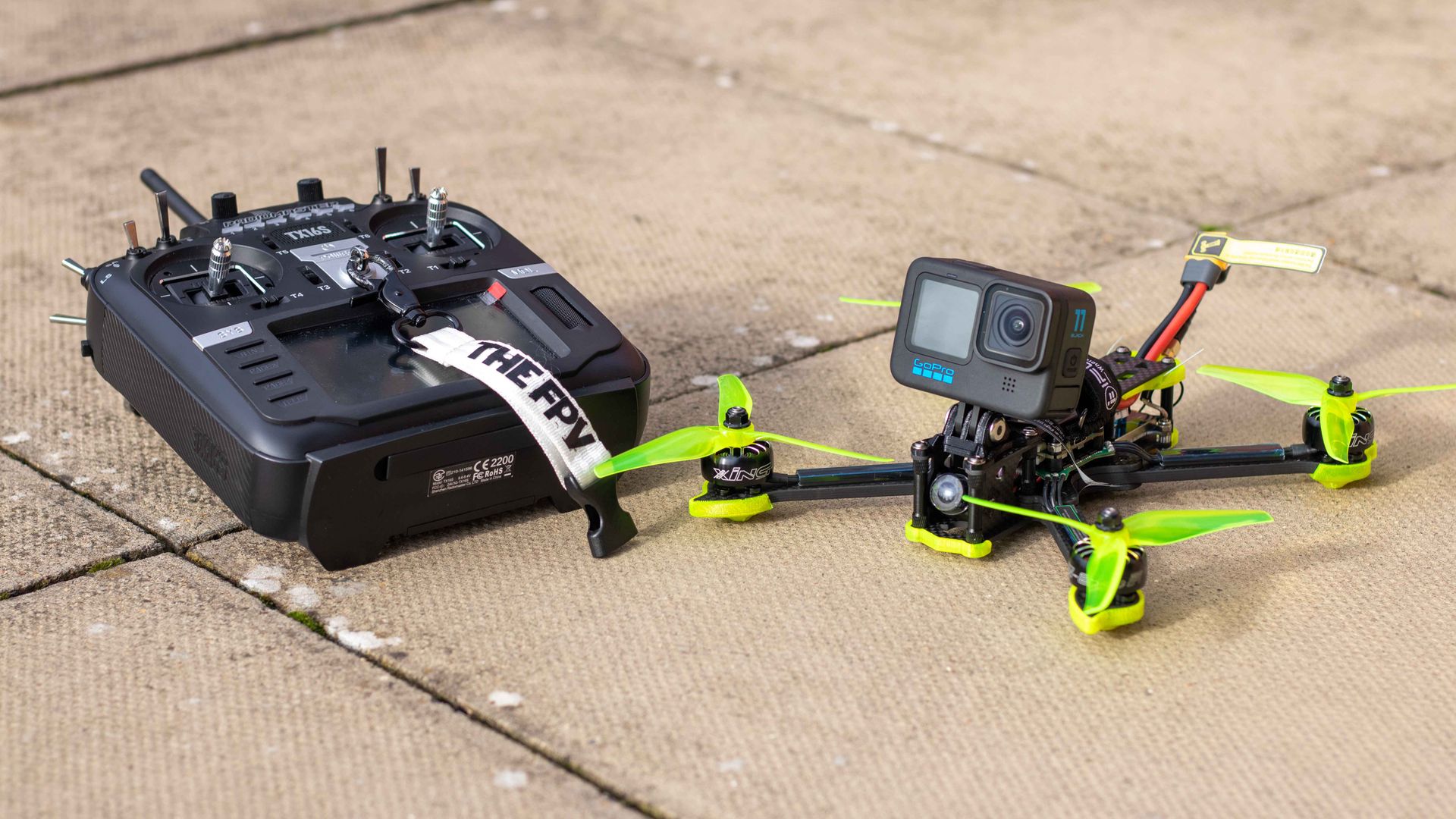
Ask ten FPV pilots what your first kit should be and you will get eleven answers — each delivered with total confidence, each assuming you want what they wanted. The result is the hobby’s most expensive beginner mistake: buying the wrong first kit. A $100 whoop kit is perfect for one pilot and a dead end for another. The kit is not the decision. The match between the kit and the pilot is the decision.
This page exists because our beginner RTF kits guide covers every real entry path in depth — but depth is exactly what overwhelms a first-time buyer. The Matcher below does the opposite job: it asks four questions about you (budget, goal, radio preference, experience) and returns a ranked shortlist of three kits drawn from the site’s kit database, each with what’s in the box, its typical price tier, and — most importantly — its honest catch.
How the Matcher works
The database holds the ten kits this site actually covers — the BetaFPV Cetus line, the EMAX Tinyhawk line, HappyModel’s Mobula BNF quads, the iFlight Nazgul 5-inch, and the two DJI on-ramps — each tagged with the budget tiers it fits, the flying goals it serves, the radio ecosystem it belongs to, and the experience levels it’s appropriate for. Answer the four questions and the Matcher scores every kit: goal fit and budget fit weigh heaviest, then radio-ecosystem fit, then experience. Kits that blow your budget are scored down hard; bind-and-fly quads are never ranked first for pilots who have never flown anything. Each recommendation links into our full guides so you can read the deep version of whichever kit the Matcher points you at.
The RTF Kit Matcher
Which ready-to-fly FPV kit should you actually buy? Answer 4 questions, get your ranked shortlist.
The ten kits in the database
Before you run the Matcher, here is the full database it draws from — organized by what each kit is for. Prices are typical street-price tiers observed across manufacturer listings and major retailers, verified October 2026. They are tiers, not quotes: street prices move, kits get discounted and discontinued, and bundles change.
The cheapest one-box entries. The BetaFPV Cetus FPV Kit (base, brushed — typically $90–$140) pairs a ~35g brushed whoop with the LiteRadio 2 SE transmitter, VR02 goggles, two small 1S batteries, a charger, and spare props, with three flight modes, altitude hold, and self-protection landing. The honest catch: brushed motors wear out — a trainer with a shelf life, not a long-term platform. The EMAX Tinyhawk III RTF kit (typically $100–$180) is the other default: quad plus E8 transmitter, Transporter 2 box goggles, a 1S battery, charger, and spare props. The Tinyhawk line is the hobby’s long-running benchmark beginner whoop, widely stocked with easy-to-find parts — a real consideration, since you will break things. See our tiny whoop beginner guide for the full whoop breakdown.
The sweet spot. The BetaFPV Cetus Pro FPV Kit (typically $140–$220) is the most-recommended beginner kit in the hobby: a brushless whoop (brushless motors outlast and outperform brushed ones), LiteRadio 2 SE, VR02 goggles, two 1S batteries, a USB charger/voltage tester, spare props, and a carry bag. Three flight modes take you from assisted hovering to full acro in one kit; altitude hold steadies first hovers; turtle mode flips the quad upright after a crash. The catch: flight time is rated around 4–5 minutes per battery, so extra packs are effectively mandatory.
The grow-with-you tier. The BetaFPV Cetus X FPV Kit (typically $200–$320) is the bridge quad: 2S-capable brushless power, an adjustable-power M04 video transmitter, a better camera, LiteRadio 3, VR03 goggles with DVR recording, four batteries, and a carry case. Docile at low settings, genuinely fun a year later — and the ELRS receiver option means it binds to the same modern radios you’d buy for a full-size racing setup, so the kit doesn’t strand you in a dead-end ecosystem. Our ELRS explainer covers why that matters. The catch: you pay for capability you won’t use in month one. The EMAX Tinyhawk III Plus (typically $300–$450) is the digital-flavored alternative with HDZero video and HD goggles — great gear, but overkill as a first purchase.
The bind-and-fly path (not one-box kits). HappyModel’s Mobula7 (quad typically $90–$140) and Mobula8 (typically $140–$200) are community legends: affordable, tough, indoor-friendly but capable outdoors. The big catch: they’re sold bind-and-fly — you supply the radio and goggles, which can double the real price. The Matcher only recommends them to pilots who already own gear or have simulator time. The iFlight Nazgul 5-inch series (quad typically $250–$400) is the step after the whoop: a real outdoor 5-inch freestyle machine the Matcher only surfaces for experienced pilots with real budgets. The full true-cost math lives in our FPV cost calculator.
The DJI on-ramps. The DJI Neo 2 Motion Fly More Combo (typically $250–$450 with RC Motion 3, Goggles N3, and three batteries) is the lowest-friction taste of the FPV perspective: palm takeoff, subject tracking, 4K camera, genuine goggles-based flight. The DJI Avata 2 Fly More Combo (typically $900–$1,100) is the cinematic route: a ducted cinewhoop with 4K/60 10-bit video, DJI O4 transmission, and roughly 23 minutes of manufacturer-rated flight time. The honest catch for both: these are camera drones with an FPV mode, locked to DJI’s video ecosystem, and their skills don’t transfer to racing quads the way simulator-plus-whoop time does. Our Neo vs Avata 2 comparison works through the decision in full.
Honest limits
The Matcher synthesizes this site’s published guides — the kits guide, the whoop guide, the FPV Ladder — not hands-on testing; we have not flown these kits side by side, and we say so plainly. Prices are observed tiers, not quotes, and kits are discontinued constantly: check that the exact bundle is still sold before you buy. Bind-and-fly recommendations show the quad’s price only — the radio, goggles, batteries, and charger you still need can double it. And check that replacement props, batteries, and frames for that exact kit are actually in stock somewhere you can order from. A kit whose parts are unobtainable is a disposable kit.
After the Matcher: what to do next
Whichever kit the Matcher points you at: buy the extra batteries (two packs is not a flying session — whoop flight time is 4–5 minutes per pack), start simulator practice while the kit ships, and find your place on the FPV Ladder so you know what comes after the kit. The Matcher answers “which kit.” The Ladder answers “what do I do with it.”
