


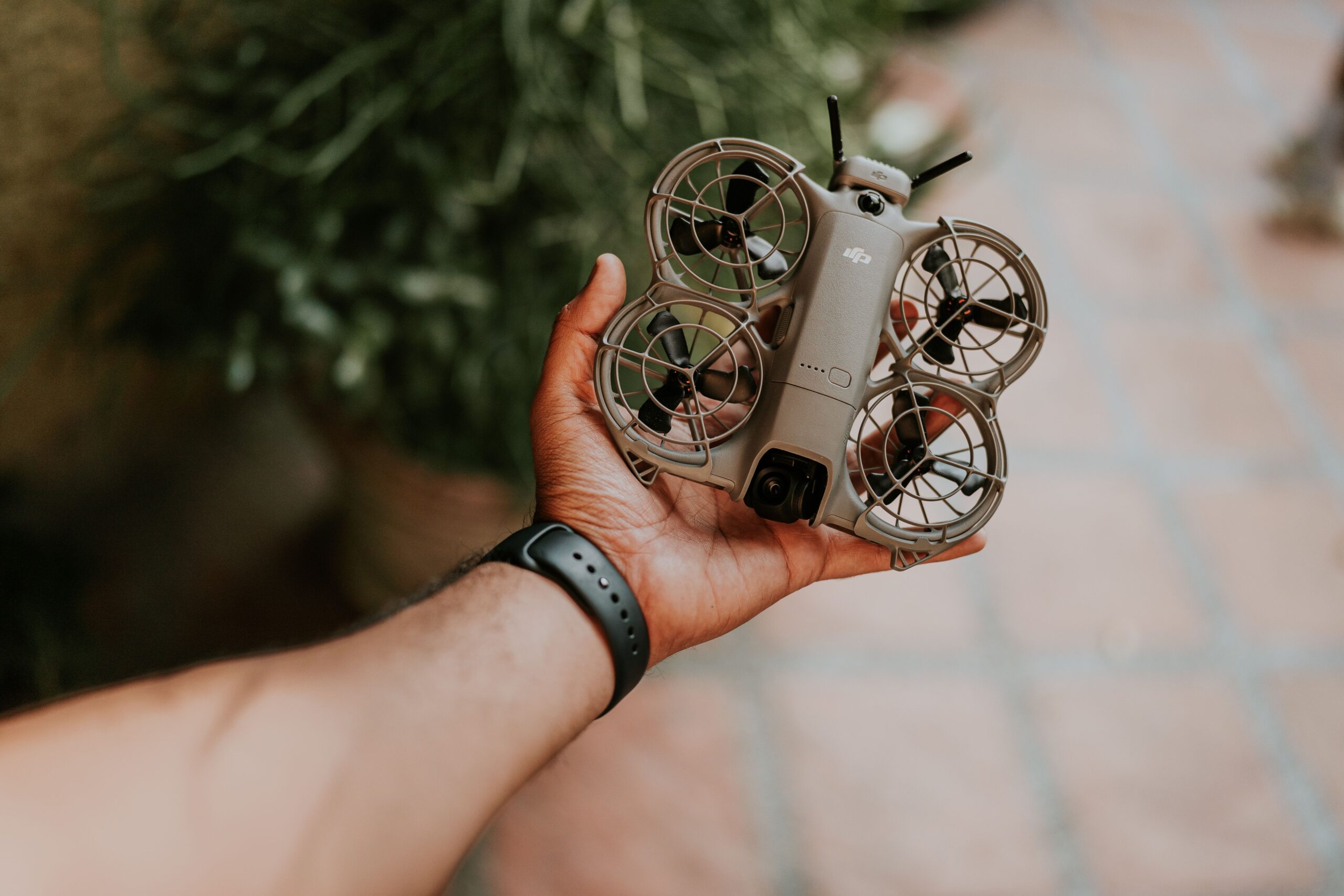
The DJI Neo and the DJI Avata 2 are both “FPV” in DJI’s marketing, but they are not really competitors — they’re two different answers to two different questions. The Neo is a selfie drone that moonlights as an FPV trainer; the Avata 2 is a real cinewhoop with a Manual mode. Buy the wrong one for your actual goal and you’ll end up either bored or overwhelmed. Here’s the honest split.
The quick answer
- Want to try FPV without committing? The Neo (135 g) with Goggles N3 is the cheapest way to find out if first-person flight is even your thing.
- Already know you want to fly FPV? Skip the Neo as a stepping stone — the Avata 2 is the drone that actually teaches you acro, and buying both is the most expensive way to learn.
- Want a flying selfie camera? That’s the Neo’s actual job, and nothing touches it there. The Avata 2 can’t palm-takeoff or film you hands-free.
Background reading: our DJI Neo guide, and the full DJI-to-FPV upgrade ladder if the Neo has already made you FPV-curious.
Head to head: the specs that matter
| DJI Neo | DJI Avata 2 | |
|---|---|---|
| Takeoff weight | 135 g | 377 g (FAA registration required in the US) |
| Camera | 1/2-inch CMOS, 4K/30 | 1/1.3-inch CMOS, 4K/60 HDR, 10-bit D-Log M |
| Gimbal | Single-axis electronic tilt (±45°) | Single-axis mechanical tilt (−85° to +80°) |
| Max flight time | ~18 min | ~23 min |
| Manual (acro) mode | Yes — with the FPV Remote Controller; propulsion-limited, DJI’s manual cautions against high-speed maneuvers | Yes — full Manual mode, up to 27 m/s |
| Controller-free flight | Yes — palm takeoff, tap-and-fly tracking modes | No — goggles and a controller required |
| Storage | 22 GB internal, no microSD | 46 GB internal + microSD up to 512 GB |
| Transmission | Wi-Fi 5 (controller-free); DJI transmission with RC controller | O4, up to 13 km (FCC) |
Specs from DJI’s published documentation for both aircraft.
What the Neo does that the Avata 2 can’t
The Neo is a flying tripod. Press the button, it takes off from your palm, films you hiking/cycling/skating, and lands back in your hand — no controller, no goggles, no learning curve. It’s 135 g (lighter than most phones), costs a fraction of the Avata 2, and is the cheapest self-flying 4K camera DJI has ever made. If your goal is footage of yourself, the Avata 2 is a worse product at a higher price: it needs goggles, it needs a controller, and it can’t do any of this autonomously.
What the Avata 2 does that the Neo can’t
The Avata 2 is a real FPV aircraft. Full Manual mode with no safety ceiling (27 m/s), a bigger 1/1.3-inch sensor shooting 4K/60 HDR, mechanical tilt on the camera, O4 transmission, and a 23-minute battery. The Neo’s Manual mode is real — DJI’s manual calls it “classic FPV aircraft control mode” — but it’s a gentle tutor with propulsion limits; the Avata 2 is the machine you graduate to when you’ve outgrown gentle.
The skip-the-Neo case (read this before buying both)
Here’s the honest money argument: if you already know you want to fly FPV, don’t buy the Neo as a stepping stone. Buy the Avata 2 (or follow our real-FPV ladder toward bind-and-fly whoops). The Neo-to-Avata-2 path is the most expensive way to learn, because you pay for two drones and use the first one as a month of training wheels.
The Neo earns its place in exactly one scenario: you’re not sure FPV is for you. If you’ve never worn goggles and want to find out whether first-person flight gives you joy or motion sickness, the Neo + Goggles N3 is a cheap experiment. If you already know — go straight to the real thing.
The ecosystem cost nobody mentions
Neither drone’s sticker price is the full price. The Neo flies controller-free out of the box, but FPV flight needs Goggles N3 and a controller. The Avata 2 requires goggles and a controller to fly at all — budget Goggles 3 and either RC Motion 3 or the FPV Remote Controller 3 on top of the airframe. Price the full stack before you decide, not just the drone.
The bottom line
Buy the Neo if you want a pocket-sized selfie drone that can also introduce you to FPV. Buy the Avata 2 if you want to actually fly FPV — and skip the Neo entirely if you’re already certain. They’re both good drones doing different jobs; the mistake is paying for both to do one job.
Methodology note: specs above are drawn from DJI’s published documentation and third-party spec reviews of the Avata 2 (ZDNET, Wikipedia, dronios — all consistent on weight, flight time, sensor, and Manual-mode speed). We don’t claim hands-on testing — this is an editorial comparison of documented capabilities and who they serve. Last verified: October 2026.
