


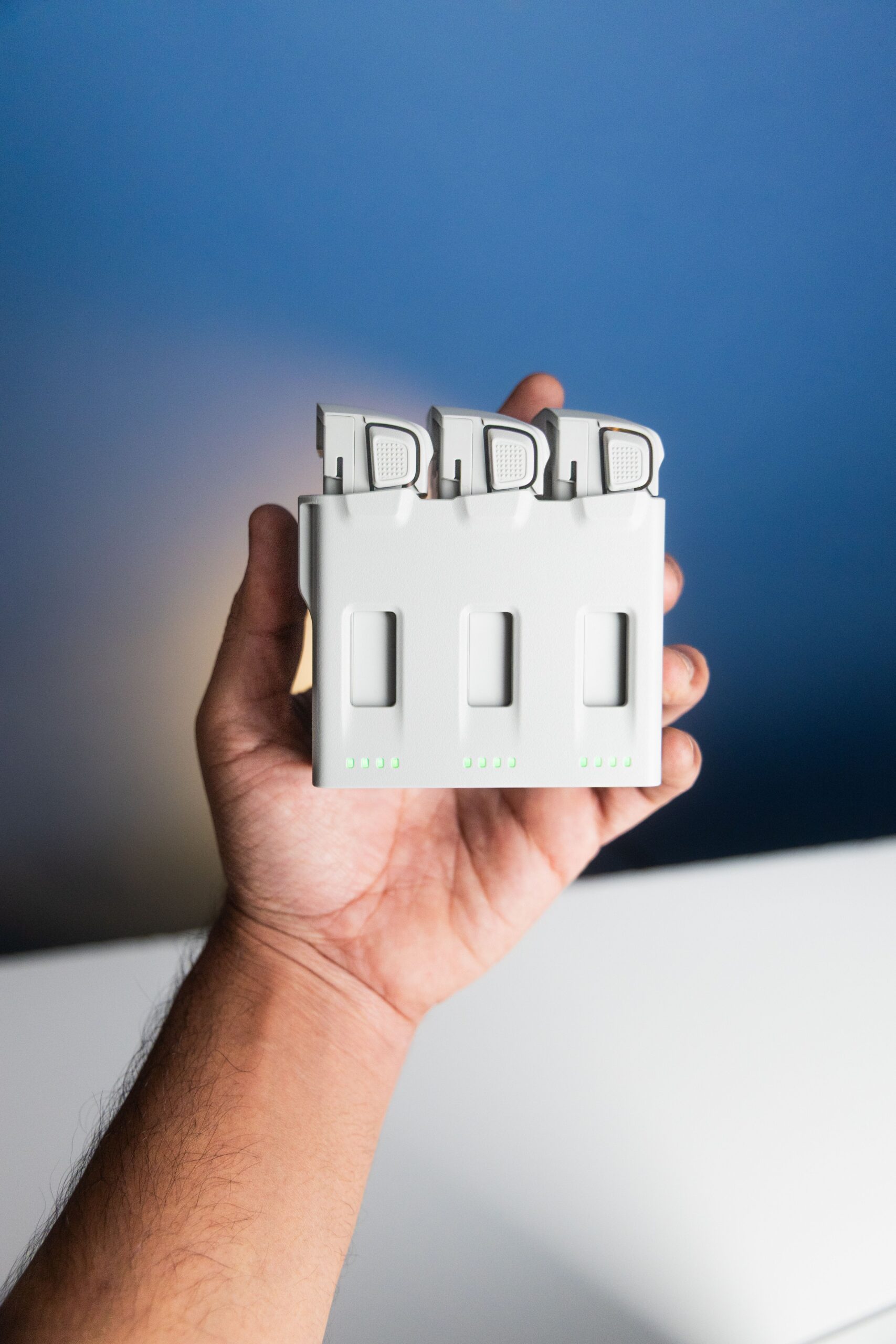
The bottom line up front: batteries are the least glamorous and most important part of FPV. The beginner questions are always the same — why don’t batteries come in the box, what do the numbers mean, which charger do I actually need, and is this stuff going to burn my house down? The honest answers: batteries are consumables with a limited lifespan and real fire risk, the numbers are simple once decoded, the right charger depends on what you fly, and yes, the fire risk is real but completely manageable if you follow a few rules. This guide covers LiPo basics, safety, what to buy for tiny whoops vs 5-inch quads, and the parallel-charging controversy.
Last verified: October 2026. No bench testing was done for this guide — battery and charger recommendations below reflect widely reported community consensus (r/fpv, IntoFPV, and established FPV educators), attributed where relevant. Specs come from manufacturer documentation.
Why batteries don’t come in the box
This confuses every beginner, so let’s get it out of the way: most FPV drones and kits don’t include batteries, or include just one. There are three honest reasons.
Batteries are consumables. A LiPo pack lasts roughly 100–200 charge cycles if treated well, fewer if abused. Including them in the box would mean shipping a product with a built-in expiration date and shipping regulations to match.
Batteries are a fire risk in shipping. LiPo batteries face strict air-freight rules. Manufacturers minimize liability by shipping drones without them.
One size doesn’t fit all. A tiny whoop flies on a single 1S cell; a 5-inch freestyle quad flies on a 4S or 6S brick. No kit manufacturer can guess which you’ll want, so they sell the drone and let you buy batteries separately.
The practical takeaway: budget for batteries and a charger as separate line items. Our true cost-of-entry calculator already builds them in — most beginners are surprised that batteries and charging gear run into the low hundreds of dollars over the first year.
LiPo basics: what the numbers mean
Every FPV battery is a lithium-polymer (LiPo) pack, and every pack carries three numbers that tell you what it is.
S-count: how many cells
Each LiPo cell has a nominal voltage of 3.7V, charges to 4.2V, and should never be discharged below 3.0V. The “S” number counts cells in series:
- 1S — one cell, 3.7V nominal. Tiny whoops. Small, light, relatively forgiving.
- 2S — two cells, 7.4V. Some micro quads.
- 4S — four cells, 14.8V. The classic 5-inch freestyle standard.
- 6S — six cells, 22.2V. The current 5-inch default — more efficient, more punch, heavier and more expensive.
Higher voltage isn’t automatically “better.” 6S is more efficient at delivering power, but the packs cost more and the whole system (motors, ESCs) must be built for it. For a beginner, this matters mostly at purchase time: buy batteries that match what your drone and charger support, and don’t mix 4S and 6S on the same quad.
mAh: capacity (flight time)
Milliamp-hours measure how much energy the pack holds. More mAh = longer flight, but also more weight — and weight is everything in FPV. A tiny whoop might fly on a 300–450mAh 1S cell for 3–4 minutes. A 5-inch quad typically runs a 1100–1500mAh 4S/6S pack for 4–6 minutes of freestyle.
The honest framing: flight time is a trade, not a spec to maximize. Heavier packs fly longer but handle worse. The community settles on sweet spots (450mAh 1S for whoops, 1300mAh 6S for 5-inch) because they balance time against agility — not because bigger is better.
C-rating: how fast it can deliver power
The C-rating describes the discharge rate — how quickly the pack can dump its energy. A 1300mAh 100C pack can theoretically deliver 130A. In practice, C-ratings are marketing numbers with no enforced standard; a “100C” from one brand may perform like a “75C” from another.
What actually matters: buy packs with C-ratings appropriate for your drone (high for 5-inch, modest for whoops), and treat the number as a rough tier indicator, not a precise measurement. Independent testers publish real discharge curves if you want the truth — but for a beginner, brand reputation matters more than the C number on the label.
The safety section (read this twice)
LiPo batteries are the single biggest safety factor in FPV. They store a lot of energy in a small package, and punctured or abused cells can vent with flame. This isn’t fearmongering — it’s the reason every experienced pilot has battery rituals. Here are the rules that actually matter:
1. Never charge unattended
This is the rule. Charge where you can see and smell what’s happening, on a non-flammable surface (concrete, ceramic tile, metal), away from flammable materials. A fire-resistant LiPo bag is cheap insurance — use one. If a pack starts swelling, smoking, or smelling sweet during charging, unplug the charger and get the pack outside.
2. Storage voltage: 3.8V per cell
The most common beginner mistake is storing packs fully charged. A LiPo at 4.2V per cell degrades measurably within days — capacity loss, increased internal resistance, puffing. The safe storage voltage is 3.8V per cell (3.8–3.9V is fine). Every decent charger has a “Storage” mode that brings packs to this voltage automatically.
Rule of thumb: put packs on storage charge within 24 hours of your last flight. Never store fully charged between weekends. Never store fully discharged either — below 3.0V per cell, a pack can become unusable or dangerous.
3. Respect puffed packs
Puffing — visible swelling of the cells — means the internal chemistry is breaking down and producing gas. A slightly puffy pack can still fly but should be retired within a few cycles. A heavily puffy pack (more than 2–3mm of expansion) should not be flown at all: it’s a fire risk. Other retirement signs:
- Elevated internal resistance: if a cell that measured 3 mΩ now reads 10+ mΩ, it’s aging. Past 15–20 mΩ, retire the pack — high resistance causes voltage sag, brownouts, and crashes.
- Reduced flight time: a 25%+ drop on the same build means the pack has lost capacity.
- Physical damage: punctured cells, cut balance leads, melted connectors — retire immediately. Don’t charge damaged packs.
4. Disposal: discharge, then recycle
Dead packs go to e-waste or battery recycling — never household trash, never fire. Discharge the pack fully first (a salt-water bath is the traditional method; a dedicated discharger is cleaner), then take it to a facility that accepts lithium batteries.
The honest bottom line on safety
Thousands of pilots charge LiPos daily without incident because they follow these rules. The accidents happen to people who charge on beds, store fully charged, ignore puffing, or leave charging packs alone in a room. Respect the chemistry and it’s a non-issue.
What to buy: tiny whoops (1S)
Tiny whoops run on single 1S cells (typically 300–450mAh), and the charging setup is refreshingly simple. You need two things: packs and a 1S charger.
Packs: buy 4–6 to start. You’ll burn through a pack in 3–4 minutes, so a handful gives you a real flying session. Stick with the connector your whoop uses (BT2.0 is the modern standard; some older whoops use PH 2.0) — connector mismatch is the classic beginner ordering mistake.
Charger: the community consensus pick is the ViFly WhoopStor V3 — a 6-port 1S charger with storage mode, widely recommended by FPV educators including Joshua Bardwell, who calls it the best whoop charger available. It charges from USB-C, DC, or XT60 input and handles both PH and BT2.0 connectors. The storage mode alone justifies it: it solves the #1 beginner battery-killer (storing at full charge) automatically.
If you’re on a tight budget, the cheap USB 1S chargers that come with some RTF kits work — but they lack storage mode, which means you’ll need to manage storage voltage manually. For the price difference, the WhoopStor pays for itself in pack longevity.
What to buy: 5-inch quads (4S/6S)
Stepping up to 5-inch means multi-cell packs, balance charging, and a real charger. This is where the investment starts.
Packs: 4–6 packs of 1100–1500mAh (4S or 6S to match your quad — check before ordering). Expect to pay meaningfully per pack; this is why the cost calculator treats batteries as an ongoing expense, not a one-time purchase.
Charger: you need a balance charger — one that charges through both the main lead and the balance lead, keeping every cell at the same voltage. The community’s long-standing favorites:
- HOTA D6 Pro — dual-channel, AC 200W / DC 650W, 15A. The most recommended all-rounder in the FPV community: charges two packs simultaneously, runs on wall power or DC, handles 1–6S. If you buy one charger for 5-inch flying, this is the default answer.
- ISDT D2 Mark II — dual-channel AC charger, compact, well-regarded. A solid alternative to the HOTA.
- ISDT 608PD — compact single-channel DC/USB-C charger. Good as a field charger or a budget entry point if you already have a USB-C PD power supply.
These are community-consensus recommendations, not tested picks — we haven’t bench-tested chargers, and neither have most of the sites that rank them. The names above recur across r/fpv, IntoFPV, and educator shopping lists because they’ve earned trust over years, which is the best signal available.
Parallel charging: the honest controversy
Parallel charging — connecting multiple packs to one charger output via a parallel board — is the great FPV time-saver and the great FPV argument. Here’s the honest version:
Why people do it: charging six 1300mAh packs one at a time takes hours. A parallel board lets you charge them together at 1C per pack (6 packs × 1300mAh = 7.8A total). For pilots who fly a lot, it’s the difference between a manageable hobby and a charging treadmill.
Why people argue about it: connecting packs in parallel lets current flow between them. If the packs are at different voltages, the fuller pack dumps current into the emptier one — potentially at dangerous rates. Done wrong, it’s a fire risk. Done right (see below), experienced pilots do it daily.
The safe-parallel rules, per community consensus:
- All packs at the same voltage before connecting — within 0.1V. Check with a LiPo checker, every time.
- Same cell count, similar capacity, similar age and condition. Don’t parallel a fresh pack with a tired one.
- Balance-charge through the balance leads, not just the main lead.
- Never more than about 6 packs on one board.
- Charge at 1C per pack total (add up the capacities).
- Use a quality parallel board with genuine connectors — cheap boards with thin traces are the failure point.
Our position: parallel charging is safe when the rules are followed and dangerous when they’re not. If you’re new, charge packs individually until the rituals are second nature — the time savings aren’t worth the risk while you’re still learning what “within 0.1V” feels like. Graduate to parallel charging when you can recite the rules without thinking.
How many batteries do you actually need?
The real answer depends on how you fly, but here’s the beginner math:
- Tiny whoop: 4–6 packs. Each gives 3–4 minutes; six packs is a solid 20-minute session with charging breaks.
- 5-inch: 4–6 packs minimum. Each gives 4–6 minutes of freestyle; serious pilots own 8–12+.
Batteries are the recurring cost of FPV. Budget for replacements — packs wear out, get crashed, and puff. Anyone telling you the kit price is the total price is lying by omission, which is why we built the cost calculator to include them.
FAQ
Can I use any LiPo charger for FPV batteries?
Any balance charger that supports your pack’s cell count works, but FPV-specific needs matter: 1S whoop packs need a 1S charger (a 6S balance charger won’t help), and the storage mode on modern chargers is the feature that actually extends pack life. Match the charger to what you fly.
How long do FPV batteries last?
Roughly 100–200 cycles with good care (storage voltage, 1C charging, landing at 3.7V per cell). Abused packs — stored full, over-discharged, fast-charged constantly — can die in dozens of cycles. Treat them well and a season of flying is realistic.
Is it safe to leave LiPos charging overnight?
No. Never charge unattended, full stop. This is the single most repeated safety rule in the hobby, and the accidents that make the news almost always involve unattended charging.
What’s the difference between LiPo and LiHV?
LiHV (high-voltage LiPo) cells charge to 4.35V instead of 4.2V, squeezing out slightly more energy. Some whoop pilots use them for the extra performance. They require a charger with a LiHV mode — don’t charge LiHV packs on a standard LiPo setting and expect the full benefit, and don’t charge standard LiPos on LiHV mode (overcharging is dangerous).
Why does my flight time keep getting shorter?
Usually pack aging: capacity loss, rising internal resistance, or voltage sag under load. Check the retirement signs above. If new packs also fly short, check for excess weight, binding motors, or an overly aggressive tune — but 9 times out of 10, it’s the batteries.
Where this fits in your FPV journey
Batteries touch everything in FPV, which is why this guide links outward in every direction:
- New to the hobby? Start with the FPV beginner’s guide for the full picture.
- Flying a whoop? The tiny whoop guide covers which packs and connectors to buy.
- Choosing goggles? The goggles and video-system guide is the other big purchase decision.
- Confused by radio protocols? The ELRS explainer decodes the other alphabet soup.
- Budgeting the whole setup? The true cost calculator includes batteries as the recurring line item they are.
Disclosure: This site participates in the Amazon Associates program. This guide contains no affiliate links — it’s reference content. When we do recommend specific products with links, they’re marked and carry rel=”nofollow sponsored”.
