


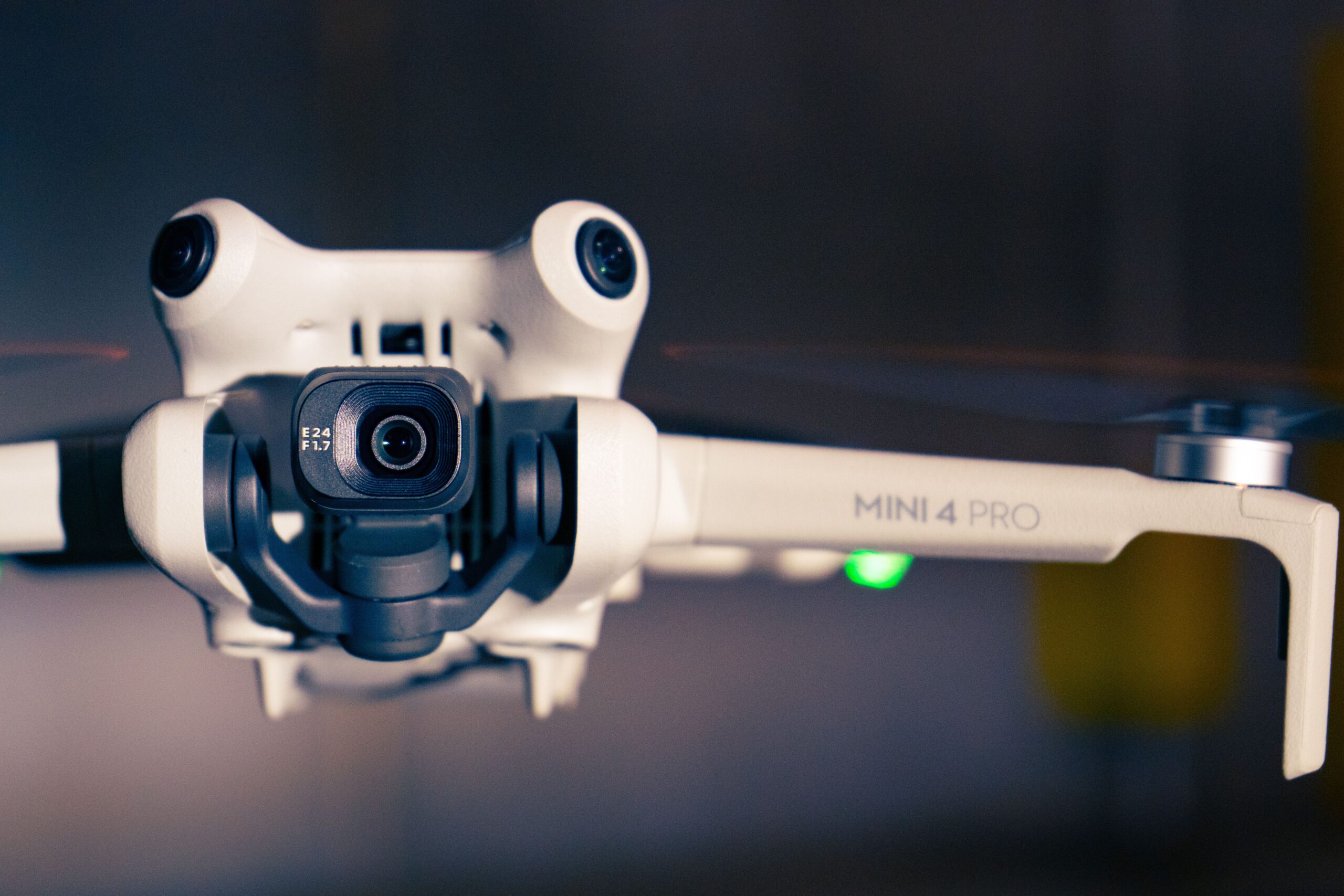
The DJI Mini 5 Pro is the first Mini to carry a 1-inch camera sensor — hardware that used to live in drones twice its size. It also costs more than the Mini 4 Pro it sits next to, and in good daylight the difference between them is smaller than the price gap suggests. This comparison exists to answer one question honestly: should you upgrade, or is the Mini 4 Pro now the smarter buy?
The quick answer
- Own a Mini 4 Pro and happy with it? Don’t upgrade. The 5 Pro’s gains are real but narrow — low-light image quality, slow-motion video, and resolution headroom for cropping.
- Buying your first serious Mini today? The Mini 5 Pro is the better camera, and cameras are the reason you buy a Mini. But the Mini 4 Pro at a discount is the better value.
- Shoot at golden hour, at night, or for clients? The 5 Pro’s 1-inch sensor earns its keep. This is the audience DJI built it for.
For the full picture of each drone on its own, read our guides: DJI Mini 4 Pro: who’s it for and DJI Mini 5 Pro: what the 1-inch sensor gets you.
What the Mini 5 Pro actually changes
The generational story here is almost entirely the camera. According to DJI’s published specifications:
| Mini 4 Pro | Mini 5 Pro | |
|---|---|---|
| Image sensor | 1/1.3-inch CMOS, 48MP | 1-inch CMOS, 50MP, f/1.8 |
| Video | 4K/60 HDR, 4K/100 slow-mo | 4K/60 HDR (up to 14 stops claimed), 4K/120 slow-mo, 10-bit D-Log M |
| Obstacle sensing | Omnidirectional | Omnidirectional |
| Tracking | ActiveTrack 360° | ActiveTrack 360° |
| Transmission | O4 | O4-class |
| Weight class | Under 249 g | Under 249 g (standard battery) |
The rest of the airframe — obstacle sensing, tracking, transmission, the sub-249g weight class — is continuity, not revolution. That’s the honest core of this comparison: the 5 Pro is a camera upgrade wearing the same drone philosophy.
Where the 1-inch sensor actually matters
A larger sensor gathers more light per pixel. In bright daylight, the difference between the two Minis is subtle — both resolve 4K detail cleanly. The 5 Pro pulls ahead when the light gets difficult:
- Sunset and blue hour: cleaner shadows, more usable dynamic range.
- Night and indoor shooting: noticeably less noise — this is the single biggest real-world gap.
- Heavy crops and prints: 50MP stills (8192×6144, JPEG + RAW) give real latitude in post that the 4 Pro’s files can’t match.
- Slow motion: 4K/120 vs 4K/100 is a modest bump; Full HD up to 240fps on the 5 Pro is the bigger deal for action work.
The sub-249g continuity: nothing changes for your paperwork
Both drones sit under 249 g with their standard batteries, which means the regulatory treatment you already have for the Mini 4 Pro carries over unchanged — in most regions that’s minimal paperwork and no registration headache. (Our sub-250g rules guide covers the US, EU, and UK specifics, and it’s worth reading before you fly anywhere new.) An upgrade doesn’t buy you regulatory simplicity — you already had it.
Who should upgrade — and who shouldn’t
Upgrade if: you shoot low-light or high-contrast scenes regularly; you deliver stills for print or clients; you crop heavily in post; you’re moving from a Mini 3 or older and skipping a generation anyway.
Don’t upgrade if: your Mini 4 Pro already does everything you ask of it in daylight; you’re a casual shooter where the gains won’t show up in your output; the price difference would buy you batteries, ND filters, or a second drone for a different purpose.
The Mini 4 Pro value argument
This is the comparison’s real thesis, and it cuts against the upgrade: the Mini 4 Pro is now the best value in the sub-249g class. It’s still DJI’s most popular creator drone, with omnidirectional sensing, ActiveTrack 360°, and O4 transmission — and with the 5 Pro on shelves, Mini 4 Pro pricing only gets friendlier. For travel vloggers, real-estate shooters, and social creators who shoot in good light, the 4 Pro delivers ~90% of the experience for meaningfully less money.
The bottom line
The Mini 5 Pro is the better camera drone — the 1-inch sensor is a genuine step forward, not a marketing one. But “better” and “worth the upgrade” are different questions. If you’re buying fresh and image quality is the job, buy the 5 Pro. If you own a 4 Pro and your footage already makes you happy, keep flying it: the upgrade tax buys you low-light headroom you’ll use some of the time, not a new drone.
Methodology note: specs above are drawn from DJI’s published documentation and our own model guides. We don’t claim lab testing — this is an editorial comparison of documented capabilities and who they serve. Last verified: October 2026.
